Le Paladin dans l’univers des chants et des combats : comparaison avec le MA et approche historique

Le palouf est plus un guerrier de groupe que le MA, à cause de ses cantiques, et etant donné que c’est un hybride il tapera moins fort que l’autre. Donc ça dépend essentiellement de ton style de jeu. le MA spé tranchant et bouclier sera un bon compromis entre défense et attaque, mais le paladin spé tranchant et bouclier, avec un template commun défensif, sera vraiment TRES défensif et fera ( pardon O amis palouf) des dégats de mouettes anémiques.

ahhh le paladin, le chevalier de la lumière, noble et preux. autant le dire tout de suite, mon personnage principal, et mon perso préféré. il a un bouclier personnel magique, et plein de chant, pour augmenter la force, larmure, et pour régénérer l’endurance, et la vie.

la paladin est un personnage très facile a jouer, agréable et facile a monter en level, de plus, il porte la plate, a un sort de pull donc pas de carreau a acheter, et grace a ces chants dont tout le groupe profite, il est très apprécié dans un groupe.

c’est a mon sens le personnage le plus polyvalent. par contre, son défaut, il ne gagne un point de force que tous les 3 level, contrairement au maitre d'arme qui lui en gagne 1 tout les levels.

cependant, le maitre d'arme est le bourrin par excellence, il tape fort, et c’est tout, il n’a pas de sort, donc moins utile en groupe du fait qu’il n’améliore pas les caractéristique. par contre, c’est le tank, la grosse frappe, il est là pour encaisser les dégâts, pour protéger les maggos et autres healers et ça, il le fait très bien.

je trouve que le perso le plus facile à monter est le paladin, car plus polyvalent, plus efficace avec ses chants, même si moins fort. en plus au level 30 le paladin peut rez, dou son utilité énorme.

enfin, pour exposer une technique paladine qui a fait ses preuves, et pour te convaincre de faire paladin ( héhé). il y a une technique que certains initiés appellent le rp ( pas le roleplay, mais le rush paladin) : cette technique consiste a constituer un groupe de paladin (uniquement de paladin), dans lequel tous les paladin mettent le chant refresh (chant de regen de vie, le seul cumulable), et après le but est d’aller xp.

pas bon en calcul le zoubbly lol 56 pv au lv 6, mais en rvr c mini lv 20 (sans parler de jaspe, c trop petit lv à mon goût), au lv 24 pr quartz, tu heal 27 pv donc un full grp de 8 : 216 pv t tre les 6 secta déjà vu deux maggo laminer un full grp de 8 pala ? ??? metonnerais bien moi ou alors les pala bougent pas et attendent les fireball comme des cretins lol je répète, j’ai jamais essayé en rvr, mais a mon avis, un full grp de la sorte ne se fait pas laminer (évidement si on a en face un rush mid de 70 zerk . ..).

meme si une team comme ca n’est pas la plus forte, elle donnera qd mm un sacré fil a retordre ^^ mais de tte facon un fullgrp de 8 pala, c’est rare en rvr . ..

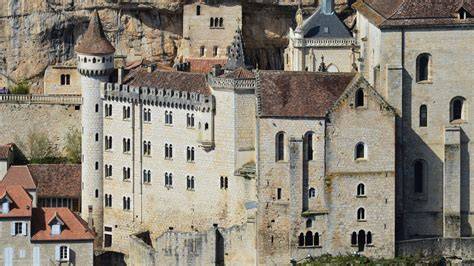
According to archaeologist and historian Anne Lehoërff, the origin of bronze swords in Europe can be traced back to the 2nd millennium BCE. These swords evolved from the triangular blades of flint daggers, similar to the one worn by Ötzi, Europe’s oldest known natural human mummy found in the Alps in 1991. Initially, their production was challenging, which contributed to their status as prestigious weapons. Throughout history, certain swords have become legendary and closely associated with mythological figures. Examples include Excalibur et Arthur, Naegling et Beowulf, Damocles’ sword, Al-Battar et Goliath, as well as Durandal et Roland. Roland is a renowned character featured in La Matière de France, also known as the Carolingian Cycle. Within this body of French medieval epic literature, typical of the Chanson de Geste, Roland is depicted as a paladin and esteemed officer of Charlemagne, and as his nephew. The legendary sword he wields, Durandal, was skilfully crafted by Wayland the Smith, a master blacksmith originating from Germanic heroic legends. According to the epic tale, La Chanson de Roland (The Song of Roland), a magnificent sword was bestowed upon Charlemagne by an angel while he was in the Vale of Moriane. Charlemagne, in turn, entrusted this extraordinary weapon to the brave knight Roland. It was said to possess a golden hilt that safeguarded a precious tooth of Saint Peter, a drop of blood from Basil of Caesarea, a strand of hair from Saint Denis, and even a fragment of Mary’s sacred garment. Legend has it that it was unparalleled in its sharpness, making it the most formidable blade in all of existence. During the Battle of Roncevaux Pass in 778, Roland bravely defended the rear of Charlemagne’s army against the Saracen troops. Roland managed to sever the right arm of the Saracen king Marsile and behead the king’s son, Jursaleu, causing the enemy army of one hundred thousand to flee in fear. In an attempt to prevent the sword from falling into enemy hands, Roland struck it against blocks of marble, hoping to destroy it. However, it proved to be indestructible. According to tradition, Roland’s mighty blow created a massive crevice known as Roland’s Breach in the Pyrenees. The Annals of the Kingdom of the Franks (Annales regni Francorum) do not mention any defeat, only a victorious expedition to Spain. An ambush initiated by the Basques is added twenty years later. Eginhard (770-840) also mentions the Basques and gives a more detailed description of the events that occurred during the crossing of the Pyrenees in his Vita Karoli Magni: “in this fight were killed, among many others, Eggihard, attendant at the royal table, Anselm, count of the palace, and Roland, prefect of the March of Brittany“. A few years later, in the Vita Hludovici (“Life of Louis”) written by L’Astronome, this fight is reported but the protagonists are not named, because they are “known”: “[…] the last bodies of the royal army were massacred on this same Pyrenée mount. The names of those who perished being known, I have refrained from saying them“. The Arabic sources on this event are rare and come from chronicles at least two centuries after the Frankish expedition. La Chanson de Roland is the oldest surviving major work of French literature. It exists in various manuscript versions and was rewritten many times, in French as well as other European languages (Spanish, Italian, German, Norse, Welsh) which testify to its enormous and enduring popularity in Medieval and Renaissance literature. The epic poem written in Old French is the first and one of the most outstanding examples of the chanson de geste, a literary form that flourished between the 11th and 16th centuries and celebrated legendary deeds. The final poem contains about 4,000 lines. Although set in the Carolingian era, the Chanson de Roland was written centuries later. There is a single extant manuscript of the Chanson de Roland in Old French, held at the Bodleian Library at Oxford. Discovered in 1835, it is considered by historians to be the authoritative manuscript. It dates from the first part of the 12th century and was written in Anglo-Norman, one of the dialectal variants of Old French spoken in the Middle Ages in England at the court of kings and in the Anglo-Norman aristocracy. Most scholars estimate that the original poem was written towards the end of the 11th century, around the time of the First Crusade - possibly by a poet named Turold (Turoldus in the manuscript itself). Relevant to the question of dating the poem, the term d’oltre mer (or l’oltremarin) occurs three times in the text in reference to Muslims who came to fight in Spain and France. In Rocamadour (southwest France), an important sanctuary and pilgrimage site in medieval Christendom, the legend claims that the true Durandal was deposited in the chapel of Mary but was stolen by Henry the Young King in 1183 during a campaign in Limousin against his father and his brother Richard (the Lionheart). Shortly afterwards, he contracted dysentery and died. Local folklore suggests that Durandal still exists et was captivatingly displayed embedded within a cliff wall.

carte historique de l’épée Durandal et Roland

Paladin is a noun. A noun is a type of word the meaning of which determines reality. Nouns provide the names for all things: people, objects, sensations, feelings, etc. WHAT DOES PALADIN MEAN IN FRENCH? Click to see the original definition of «paladin» in the French dictionary. Click to see the automatic translation of the definition in English. Paladin Paladin The paladin is a knight who has attained one of the highest ranks, being part of a religious order and carrying the sacred power of faith. Nevertheless this term has undergone a rather important evolution, in the sense that of sacred knight starting in crusade on behalf of a prestigious and military order, the name paladin will evoke a more humanistic concept of errant knight defending the widow and the orphan. Cette nuance peut être perçue en comparant deux opéras de Vivaldi basés sur le même personnage de Roland : Orlando furioso et Orlando finto pazzo. Cette appellation vient de l'époque romaine. Sous Dioclétien, le corps de la Garde prétorienne, constitué de fantassins romains, a été remplacé par un contingent monté de barbares. Leurs possessions de monture leur a donné la dénomination d’equites, terme également utilisé à l'époque pour désigner l'Ordre des chevaliers romains.

Histoire des Paladins Humains

The following French words have a similar or identical meaning as «paladin» and belong to the same grammatical category. Find out the translation of paladin to 25 languages with our French multilingual translator. The translations of paladin from French to other languages presented in this section have been obtained through automatic statistical translation; where the essential translation unit is the word «paladin» in French. The term «paladin» is very widely used and occupies the 5.345 position in our list of most widely used terms in the French dictionary. The map shown above gives the frequency of use of the term «paladin» in the different countries. List of principal searches undertaken by users to access our French online dictionary and most widely used expressions with the word «paladin».

illustration médiévale duel paladin

The translations of paladin from French to other languages presented in this section have been obtained through automatic statistical translation; where the essential translation unit is the word «paladin» in French. The translations of paladin from French to other languages presented in this section have been obtained through automatic statistical translation; where the essential translation unit is the word «paladin» in French.

La légende de Roland: De la genèse française à l'épuisement ... qui, sans but précis, parcourt des contrées inconnues. l'errance de son neveu à l'aventure chevaleresque suprême, la quête du Saint ...

scène de La Chanson de Roland

Paladin est utilisé dans des contextes modernes de jeux et de fiction pour désigner un chevalier défenseur des opprimés et porteur de la foi, avec une forte dimension communautaire et de soutien au groupe.

Tableau récapitulatif rapide

AspectPaladinMA
OrientationGroupe, soutien, chantsSolo/Tank hybride
DéfenseTrès défensif, bouclier, plateBonne défense avec bouclier
AttaqueChants, dégâts modérésTranchant et bouclier, forte frappe
ProgressionRelativement facile à monterPlus technique, montée rapide
Utilité en groupeRégénération, buff, rez possibleTank et dégâts
diagramme de progression paladin vs MA

Le paladin reste donc le personnage le plus polyvalent et apprécié en groupe grâce à ses chants qui profitent à tout le groupe, et à sa capacité de rez à partir du level 30. Toutefois, le MA conserve l’icône du bourrin efficace et du tank pur, utile pour encaisser et protéger les healers et les maggos. Cette dualité offre une expérience de jeu riche selon le style recherché, entre soutiens défensifs et puissance brute.

tags: #chant #of #the #paladin